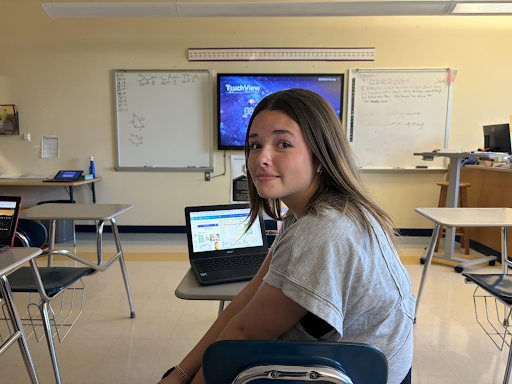

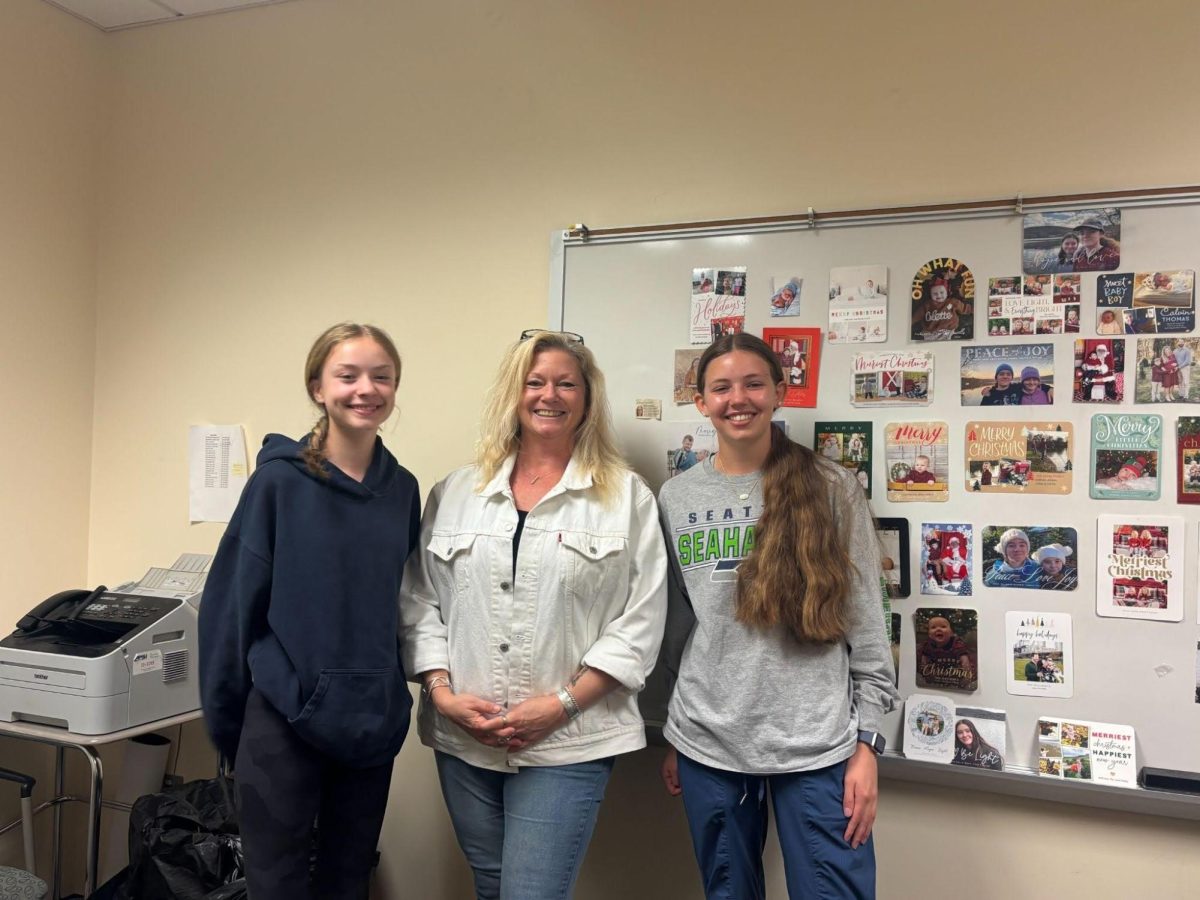
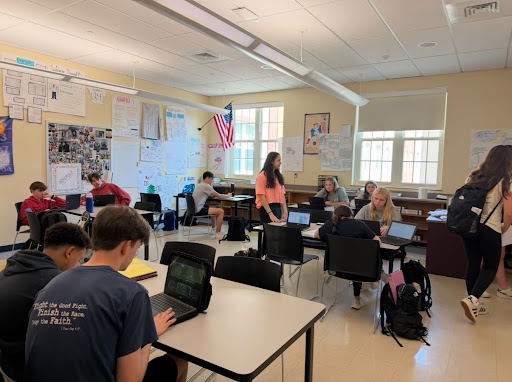











The work study program has been around at Norwood High School for years. It is a program where students come to school from 8:15 to 11:30 and then are able to go to work right after. It is a good opportunity for students who do not think the regular class-to-class schedule works for them.
Many students thrive in this program because they are able to still get schoolwork done, but their whole day doesn’t go away, unlike mainstream kids who go to school till 3 and work right after. Students stay in one classroom for the day and are assigned work to do through all subjects, and they can choose extra classes to do as well.
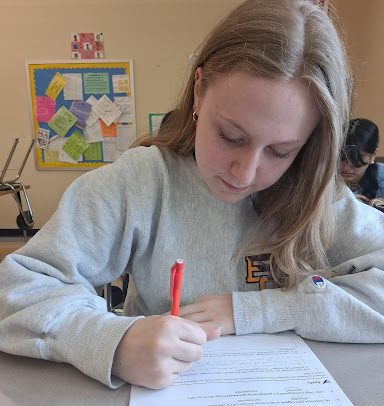
Maddison Brown Q&A
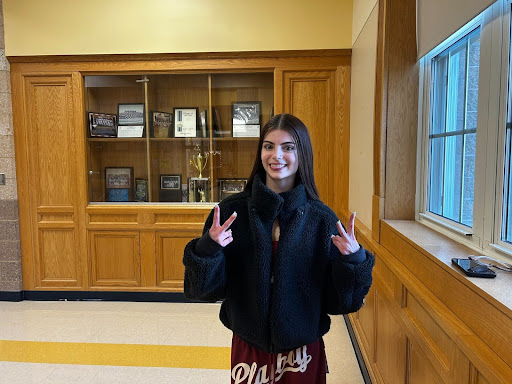
Why did you choose the 11:30 work study program?
I chose the work study program because it gave me more hours for work, which helped me benefit myself to pay for the stuff I need, and it gave me experience for after high school.
How has it helped, rather than being in actual school/classes?
It has helped me because I have my own time to do the work at my own pace and how I want to do it, and it gives me time after school to do all the stuff that I need to get done, rather than rushing from school to work.
What is your job?
I work as an assistant at Delaria Salon in Norwood.
How has it benefited you?
It has benefited me because it’s given me experience in working with real customers.
Have you always wanted to do it since being an underclassman?
Yes, because I always knew that I needed my own space, and being in classrooms wasn’t for me.
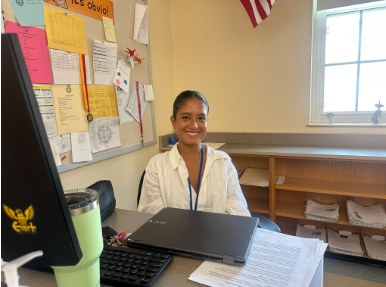
Mr. Martinelli Q&A
What’s your profession?
I am the teacher in the alternative classroom at Norwood High School.
Why did you choose this program?
I chose this program because I figured it was a way that I could help kids get through high school and figure out what they wanted to do, post-high school, but also get good experience while they were still in school to help guide them in what they’re gonna do, going forward after high school.
Have you always taught this program?
I’ve been the teacher in this program since 2007.
Did you start this program?
No, this program has been here since, like, the late ’70s, early ’80s.
Do you know how the program came to be?
I actually don’t know how it came to be, but I know it was late ’70s, early ’80s, for students who just met with, um, not difficulty, but just the mainstream setting wasn’t the best way for them to learn, and, you know, access their, you know, best potential as a student
Have you ever taught regularly scheduled classes?
I have not. I’ve always been in an alternative classroom.
Even before Norwood High?
I taught for one year in Franklin, but I did the same thing, frankly.
Do you see a difference between the students in your classroom and the students you see in the halls?
I don’t really. I think, um, I don’t, because I’ve always coached, like, high school football. I coached at Norwood here for 3 years. In 2010, 11, and 12, I’ve coached football at Foxborough High School since the early 2000s, and, um, a lot of those students were mostly mainstream kids, and I think kids are kids, kids are the same.
Do you know how many students you have on average?
On average, I have about 20 students per year. We might start with 16, 17, but we end up in the 20s, low 20s.
Has the number of students in your classroom been the same or has it been progressing?
When I first started here in 2007, I had about 8 to 10 students–that would get up to maybe 12. Now we start with like, like I said, 16, 17 end up in the 20s.
What’s the biggest difference, do you think? Other than the time and schedule that you have in that classroom?
So I think the, what I always say is it’s a good way for students to balance their social life, their academic coursework, and employment, or, you know, career oriented tasks, so they can split their day into kind of three factions, whereas students in the mainstream are here until 3 o’clock, and then you work, you have very little time, you know, to complete, you know, your homework, and, You know, have some, like, free time, which I think is important. So it’s about balance.
Is there something you enjoy the most about teaching this program?
I think just talking to the kids every day and seeing where they end up when they graduate. I have a lot of kids that I had back in the day that always come back and fill me in and let me know where they’re at, and it’s great to see them grow from high school kids to like adults and have careers and homes and stuff like that.